
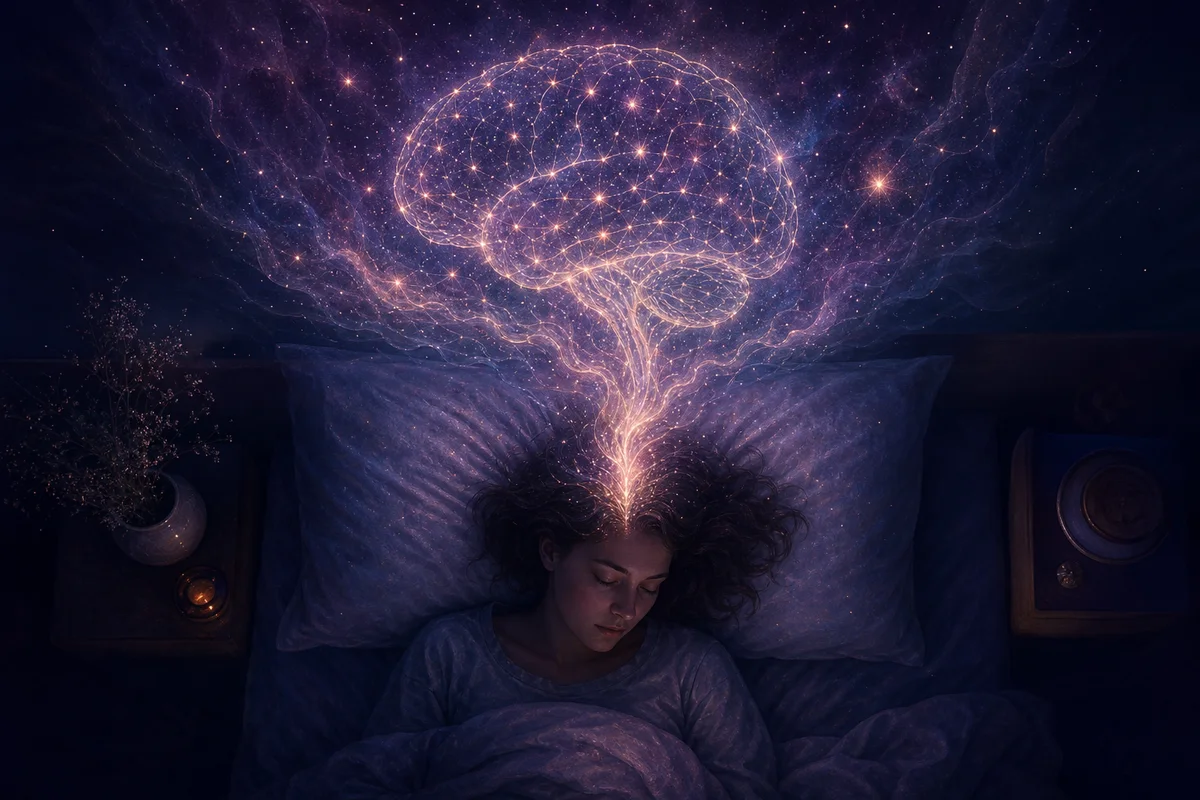
When do dreams happen?
- REM sleep (rapid eye movement). Most dreams happen here. Brain activity rises, the eyes dart from side to side under the lids, breathing and heart rate speed up, but the body's muscles are temporarily paralysed. That paralysis is a safety feature: it stops you acting out the dream.
- Non-REM sleep. You also dream in the other stages, but these dreams tend to be vague, less vivid and harder to remember.
How does the brain build a dream?
- The posterior cortical "hot zone". When people are dreaming, regions at the back of the brain (visual areas, the precuneus and the posterior cingulate) show more high-frequency activity. These areas stitch sights, sounds and feelings into a single experience.
- Memories, reshuffled. What you saw, heard and felt during the day is stored in memory. During sleep, neurons fire spontaneously and recognise patterns, and the brain rearranges these fragments of memory, logic and emotion into the strange scenes of a dream.
- The logic centre turns down. The prefrontal cortex, which handles reasoning and reality-checking, is much less active while you dream. That is why dreams break the rules of time, space and common sense.
Random signals, random materials
Awake, your neurons work in an orderly way. In REM sleep, the pons at the base of the brain starts sending bursts of electrical signals upward on its own. They are random and unordered; scientists call them PGO waves (ponto-geniculo-occipital waves).
- A blind box of images and feelings. These signals stimulate the visual cortex and the amygdala, which handles emotion. Fresh memories from today, old emotional wounds, even scenes from yesterday's film are shaken loose, with no particular order.
- The brain insists on a story. The brain is an organ obsessed with meaning. Faced with unrelated fragments (a neighbour's face, a fear of heights, the hot pot you had for dinner), the back of the cortex tries to link them into a plot.
- The result. You dream that you and your neighbour are eating hot pot on the edge of a cliff.
Why it all feels normal: the reviewer is off duty
The prefrontal cortex, just behind your forehead, is the brain's rational director. It handles reasoning, the sense of time, spatial order, self-awareness and critical thinking.
- The logic guard clocks off. During sleep its activity drops sharply, so the dream's story is written with no fact-checking at all.
- Time and space come loose. Years pass in a moment; ancient and modern blend without a seam. You open a classroom door and step onto the sea floor.
- The absurd goes unnoticed. Awake, if someone suddenly turned into a cat, your prefrontal cortex would sound the alarm. In a dream you think, "Oh, he's a cat now. I'd better turn into one too."
- Until you wake. Only when you open your eyes and the prefrontal cortex comes back online do you think, "What a strange dream."
梦是在什么时候发生的?
- 快速眼动睡眠(REM):人类的大多数梦境都发生在这一阶段。此时大脑活动加剧,眼球在眼皮下快速水平转动,呼吸与心跳加快,但身体肌肉处于暂时性麻痹(一种保护机制,防止人把梦境演出来)。
- 非快速眼动睡眠(Non-REM):在深睡或浅睡的其他阶段也会做梦,但这些梦通常比较模糊、缺乏生动的画面,且很难被记住。
大脑是如何产生梦的?(神经机制)
- 后皮质热区(Posterior Cortical Hot Zone):研究发现,当大脑产生梦境意识时,大脑后侧区域(包含视觉区及楔前叶、后扣带回等)会出现更多的高频活动,负责把视觉、听觉、情感等不同感官体验整合在一起。
- 记忆与神经冲动的重组:白天接收的视觉、声音、情感和生活经历会储存在记忆中。在睡眠时,神经元会进行模式识别与自发的电信号传导,大脑将这些碎片化的记忆、逻辑和情绪重新编排,就拼凑出了光怪陆离的梦境。
- 逻辑控制区减弱:做梦时,负责现实逻辑和理性思考的前额叶皮质处于较低的激活状态,所以梦里经常出现违背常理、时空错乱的荒诞情节。
神经元的自发传导与碎片拼凑(素材的胡乱堆砌)
在清醒时,你的神经元各司其职,有条不紊。但当你进入快速眼动睡眠(REM)时,大脑底部的脑桥(Pons)会开始自发地向上传递电信号。这种电信号是随机的、无序的,科学上称为 PGO 波(Ponto-Geniculo-Occipital waves)。
- 视觉与情感素材的“盲盒”:这些随机的电信号会直接刺激你的视觉皮层和负责情绪的杏仁核。于是,大脑仓库里那些白天刚存进去的记忆碎片、陈年的情感创伤,甚至你昨天看过的科幻电影画面,都被这些电信号无差别地“震”了出来。
- 大脑的“强行解释”:大脑是一个极度追求“意义”的器官。面对这些突然蹦出来的、毫无关联的记忆碎片和情绪(比如:隔壁张三的脸 + 恐高的焦虑感 + 刚吃过的火锅),大脑的后皮质区域会试图把它们串联起来,编织成一个故事。
- 结果:于是你做了一个梦——你和张三在悬崖边上吃火锅。
前额叶皮质低激活(逻辑和审核机制的下线)
为什么这么离谱的剧情,你在梦里却觉得理所当然,一点都不怀疑呢?这就轮到前额叶皮质(Prefrontal Cortex)“背锅”了。前额叶皮质位于我们额头的正后方,是人类大脑的“理性总指挥”,负责逻辑推理、时间感知、空间秩序、自我意识和批判性思维。
- 逻辑“保安”下班了:睡觉时,前额叶皮质的活动显著降低,基本上处于“离线”或“半休眠”状态。这意味着梦境的故事在生成时,没有任何逻辑审核机制。
- 时空概念错乱:因为负责时间的区域下线了,梦里的时间可以瞬间跨越数年,或者在古代和现代之间无缝切换;因为负责空间的区域下线了,你前一秒还在教室,推开门下一秒就到了海底。
- 无法识别荒谬:在清醒时,如果一个人突然变成了一只猫,你的前额叶会立刻发出警报:“这不可能!”但在梦里,因为审核机制关停了,你甚至会觉得“哦,他变成猫了,这很正常,我也得赶紧变一只”。
- 直到醒来:只有当你睁开眼,前额叶皮质重新通电激活,你才会突然意识到:“天哪,我刚刚做了个什么怪梦,太荒谬了。”